


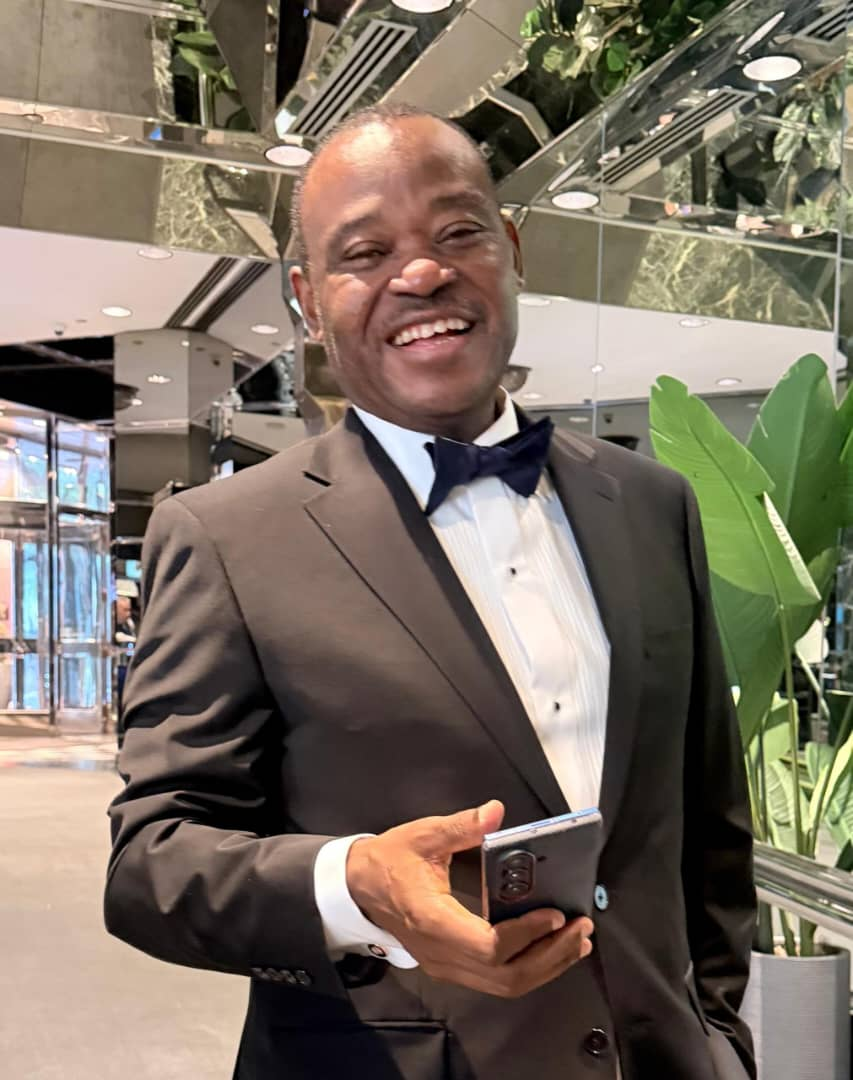

Ambassador Jimoh Ibrahim, on Tuesday, described it as a great honour to be elected Chairman of the Budget and Administration Committee of the United Nations.
He expressed profound appreciation to President Bola Ahmed Tinubu, GCFR, saying:
“Mr President, as your student in the reform class, be assured that those teaching slides will be reflected in the budget, appropriations, and human resources management of the United Nations.”
Jimoh also thanked the people of Nigeria for the historic achievement. He assured his colleagues from the 193 Member States that, at this challenging moment in history, he would provide strategic leadership in navigating a complex and rapidly changing global environment.
Read below:
The Acceptance Speech by His Excellency Mr. Jimoh Ibrahim, Nigeria’s Permanent Representative to the United Nations, Ambassador Extraordinary and Plenipotentiary, Following His Election as Chairman of the Fifth Committee of the United Nations General Assembly on 2 June 2026
Madam President,
Excellencies, Distinguished Delegates,
It is indeed an honour and a privilege to have been appointed by this distinguished Assembly as the Chair of the Fifth Committee of the General Assembly. I am elated by your trust, yet humbled by the responsibility bestowed on me today to coordinate the Committee’s heavy and complex workload. This Committee serves as the principal body responsible for all matters pertaining to administration, budgets, and human resources. It includes all 193 UN Member States, underscoring the significance of the Committee in steering the UN’s financial and administrative operations.
Allow me to extend my sincere appreciation to all regional groups and delegations for their support and confidence. I also wish to congratulate and thank our Bureau colleagues—the Vice-Chairs and Rapporteur—as we collectively undertake this important responsibility in the spirit of cooperation and shared purpose. We equally pay tribute to the outgoing Bureau for its distinguished stewardship and express appreciation to the Secretariat for its continued professionalism and support to the Committee.
We are at a pivotal moment. The United Nations has launched the UN80 reforms to streamline its internal operations and improve efficiency. These updates build on plans initiated when the current management team assumed office a few years ago. Today, these efforts are even more important, given the increasing financial challenges facing the organisation, including a budget shortfall of over $1.8 billion and ongoing efforts to ensure that Member States pay their assessed contributions in full, on time, and without preconditions.
Though these steps may seem modest, they represent meaningful progress toward achieving the organisation’s broader goals, including rethinking operational processes and identifying cost-saving measures. This is especially vital as demand for the UN’s work continues to grow among its Member States.
The global system is characterised by rising geopolitical tensions and economic difficulties, which have contributed to increased poverty. Poor governance, resulting from inadequate responses to increasingly disruptive technological innovations, further exacerbates these challenges. Leadership has become a central focus of the global development agenda. It is essential that we respond proactively; otherwise, the ecosystem will act on our behalf. The current moment demands actions that treat knowledge development as a strategic response to insecurity, development, and leadership challenges.
The global economy faces substantial difficulties, with clear shortcomings in meeting human development needs. This period requires the United Nations to manage deficit financing arising from converging complexities that place significant burdens on revenue generation. Within this framework, the Fifth Committee is expected to maintain its consensus-based decision-making approach.
The Committee operates through an intensive, consensus-driven process to ensure broad agreement among all nations. This methodology is crucial to securing the effective implementation of the United Nations Charter, which affirms the equality of Member States and promotes the development of a collaborative and cooperative global economy. Given heightened tensions, a prompt, critical, and innovative strategy is required to create opportunities within this intricate environment.
As a member of the Budget and Appropriation Committee in the 10th Senate and Chairman of the Committee on Inter-Parliamentary Relations, I hope to utilise my wealth of experience in building consensus. During this pivotal period in history, we look to the founding fathers of the United Nations for guidance in fostering collaboration and cooperation toward our shared goals.
Our aim is to support a vibrant and sustainable United Nations. Within the Fifth Committee, we will focus on stewardship and corporate governance, prioritising a thoughtful, hope-driven budget for all humanity rather than merely transactional cost management. I am excited to collaborate with each of you and to learn from your leadership at every level.
Thank you for your continued support for me and for my beloved Nigeria as we reaffirm our commitment to the ideals and aspirations of the United Nations.