


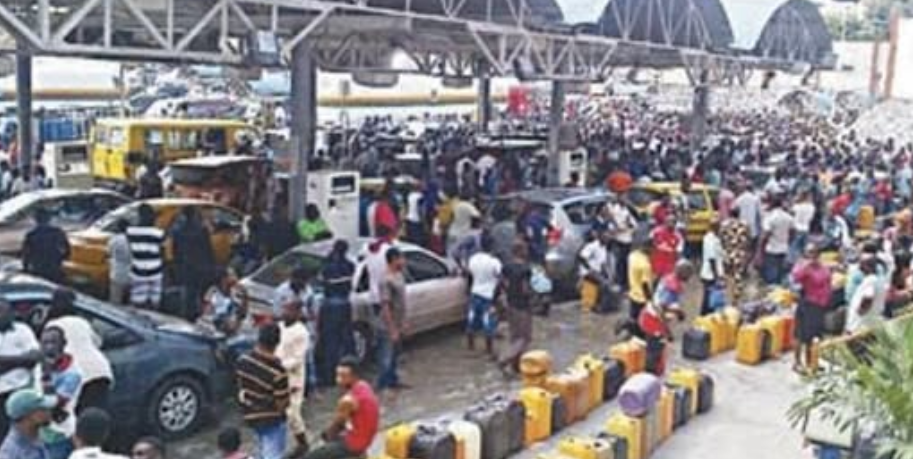

The fuel relief measures announced by the Federal Government on 8 October are a bold attempt to build a roof for weather-beaten Nigerians. Below is what each of the 10 measures means for your pocket, your fare and your future.
How We Got Here
Before 2023, petrol sold at about ₦200 to ₦500 a litre only because the government paid the difference. Behind that price sat a multiple exchange rate system that the Finance Ministry says brought the economy to the brink of total collapse. Foreign reserves ran dry, the naira’s real value was hidden, and the “cheap” fuel was often not at the pump at all.
Removal was the surgery. Between June 2023 and December 2025, it released ₦15.8trn to the Federation Account, of which ₦10.4trn went to states and local governments. In May 2023, 27 states could not reliably pay salaries. Today none is in that position. In May 2023, investors were reluctant to come to Nigeria, and infrastructure nationwide was in a state of paralysis. Today, investment is returning and infrastructure is being renewed. The parallel-market gap has narrowed from over 60% to under 5%, and gross reserves are over $55bn, an 18-year high.
The pain is real too. Petrol was about ₦830 a litre when crude was near $70. It now averages about ₦1,400, with Brent above $100 after eight months of Gulf conflict. These measures are the government’s attempt to pass the gains to the people.
The 10 Measures
- NNPC margin discount (30 days, transporters first)
Economic: it cuts the cost at the point where fuel becomes fares. Lower petrol costs for buses show up in cheaper tomatoes.
Psychological: a visible discount is a signal. People appreciate the attempt to bring down cost.
Political: it is a trial balloon. If it works, expect it to be renewed. If it lapses, expect clamour for continuity.
Social: the cliff is day 31. Relief with an expiry date can teach people to wait for the next one.
- Forward sales of crude to domestic refiners
Economic: it fixes the refiner’s input cost in advance, as a farmer fixes the price of seed before planting.
Psychological: it shifts the story from “dependence on imported fuel” to “confidence in home supply”.
Political: it frees crude now tied up in legacy commitments from the subsidy era. That is a quiet test of whether old obligations can be unwound.
Social: the benefit depends on production rising. Barrels not pumped cannot be sold forward.
- Price modulation: a ₦1,350 ceiling on landing cost
Economic: it smooths prices without freezing them. Refiners and importers absorb overruns and recover them later, inside the ceiling. It also carries a smuggling risk: if the ceiling sits below regional prices, fuel leaks across border.
Psychological: ₦1,400 today and ₦1,400 tomorrow beats ₦1,500 today and ₦1,300 tomorrow. A predictable price is a form of income.
Political: it needs refiners and importers to carry the shortfall, and the ceiling is still being negotiated.
Social: fares rise like rockets and fall like feathers. A stable pump price protects stable transport fares.
- Removing illegal road levies
Economic: a truck stopped at 10 checkpoints pays a toll in cash and in time. Cutting levies is a fuel-price cut by another name.
Psychological: it removes the daily humiliation of the roadside “settlement”.
Political: it tests federalism. The 2025 tax reform laws give Abuja the framework, but states mainly hold the roadblocks.
Social: the biggest winners are the small trader and the okada rider, who are spared the toll. But this gain evaporates if police roadblocks remain a menace.
- More cash transfers and subsidised credit
Economic: it targets the household instead of the pump. A pump subsidy gives most to those who burn most fuel, and that is the wealthy.
Psychological: cash lets families decide for themselves.
Political: it needs a clean beneficiary register. Without one, the list becomes a campaign tool.
Social: credit to small businesses turns relief into capacity. A cushion can become a ladder.
- Faster CNG rollout
Economic: official figures show more than 120,000 vehicles now run on CNG, served by over 400 conversion centres, 96 refuelling stations and 18 L-CNG stations. Over 550 CNG buses are already deployed, and where they run, fares have fallen by 30% to 50%. A modest fleet, but proof it works. Customs data show imports of CNG vehicles, electric vehicles and renewable energy equipment have more than doubled since May 2023, helped by duty waivers of over ₦100bn.
Psychological: it offers an exit from the free fall, not just a seatbelt for the bumpy ride.
Political: some states already run CNG buses, and more plan to introduce them and electric tricycles at scale. That makes it a governors’ scorecard.
Social: passing savings to passengers is encouraged, not enforced. The public must demand it from operators.
- Excess profit tax, with proceeds for transport vouchers
Economic: It would tax windfalls made in a crisis, with proceeds ring-fenced for transport support and vouchers for low earners.
Psychological: it answers the suspicion that someone is profiting from the pain. Fairness is a currency.
Political: it risks deterring investment if badly designed. The test is a narrow definition of “undue advantage”.
Social: relief for urban minimum-wage earners and a possible tax break for low-income earners in the 2027 Finance Bill reach the people who feel the squeeze first.
- Cutting regulatory costs
Economic: every permit is a hidden tax on every product. Fewer permits mean lower shelf prices.
Psychological: bureaucracy is time stolen from people.
Political: it is the cheapest reform to announce and the hardest to deliver, because every regulatory fee has a defender.
Social: it favours the small firm, which cannot afford a “facilitator”.
- National Strategic Fuel Reserve
Economic: it is a shock absorber. Stock released under published rules deters hoarding and artificial scarcity.
Psychological: it reduces the pressure of queues, even in a crisis. The ministry estimates it plainly: availability is the first form of affordability.
Political: the rules must be published and followed. A reserve opened by discretion is a patronage tap.
Social: it protects the hospital generator and the market trader as much as the motorist.
- Better traffic management and NIPOST address codes
Economic: an idling car burns fuel and earns nothing. A delivery van that cannot find an address does the same.
Psychological: time recovered from gridlock is time returned to family.
Political: it is the easiest measure to test, because its results show up on the streets.
Social: address codes give millions of Nigerians a verifiable place in the economy. It is the quiet change in the package that could matter most.
What Nobody Is Saying
A subsidy is not a discount. It is a loan with the whole country as guarantor. The ministry estimates that returning petrol to its pre-reform price would cost over ₦20trn a year, and a ₦500 price over ₦16trn. It also warns the naira could approach ₦3,000 to the dollar, with “subsidised” petrol at ₦2,000 or more. Those are the government’s own estimates, and they should be tested, but the logic is sound. The bill is paid in salaries, inflation or a weaker naira.
The package is built on one idea: smooth the price, shrink the cost of living around fuel, and shield the most vulnerable. It does not claim to restore a blanket subsidy, and it does not claim all the pain is gone. Its credibility will rest on execution, transparent monthly price reviews and clean targeting.
The test is simple. Judge it over the next 90 days, which covers the 30-day discount and the 60 days after it, when we will see whether relief outlasts the discount.