




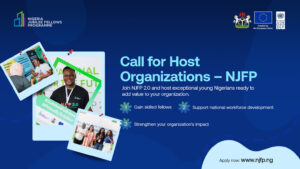
The Nigeria Jubilee Fellows Programme (NJFP) is expanding its roster of participating organizations as it prepares for its second implementation phase.
Launched through a partnership between the Federal Government of Nigeria, the UNDP, and the EU, the programme offers young graduates a 12-month work placement with organizations committed to providing mentorship and practical, on-the-job experience.
The model is simple: organizations register and outline the roles or skill sets they need; graduates apply and undergo screening; successful matches lead to year-long placements. NJFP manages the administrative processes, including screening, documentation, and ongoing support while host organizations provide the workspace, supervision, and learning environment.
So far, thousands of fellows have been placed across sectors and states. Some host organizations have retained their fellows as full-time staff, while others have used the programme to access skilled talent they may not have been able to attract or afford through traditional recruitment.
In the upcoming phase, the programme aims to refine its matching system to ensure even greater alignment between fellows’ career goals and organizational needs. The goal is to reduce mismatches and increase the value of each placement for both the fellows and their hosts.
Eligibility is broad: any registered business, NGO, or government institution can participate, as long as it can supervise a fellow and provide required documentation such as CAC registration, TIN, and basic organizational information. Participation is free.
Organizations register online at www.njfp.ng, complete a profile, upload required documents, and specify the type of support they need. Once approved, they join the pool from which fellows apply or are matched.
For small or rural organizations, the NJFP offers access to graduate-level talent that might not ordinarily consider their vacancies. For larger institutions, it serves as a structured pipeline for assessing potential hires while contributing to national efforts to reduce youth unemployment.
While the programme is not a cure-all for Nigeria’s employment challenges, it does create a viable pathway for young graduates to gain experience and a low-risk avenue for organizations to expand their capacity.
Whether participation is the right move ultimately depends on an organization’s needs and readiness, but the programme’s early results make a strong case for its continued expansion.