


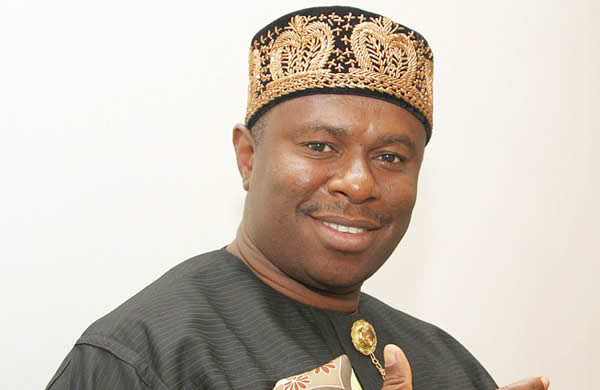

By Dakuku Peterside
Taking the pulse of a nation can be either complicated or simple. Polls and surveys aim to measure people’s feelings; social media data provides valuable, timely insights into the national mood. But often, the best way is the oldest: gather with people who care about the country and listen to them.
On Monday, 10 November 2025, at the First Daily annual lecture, the question was clear—how can we make our votes count in 2027? Dr Sam Amadi of Abuja School of Social and Political Thoughts led the discussion, and panellists Majeed Dahiru, Gloria Ballason, Sam Itodo, Frank TieTie, and Randy Peterz agreed on one point: Nigerians want to vote, but many don’t trust the system to honour their choices. The low voter turnout in 2023 revealed a deep trust gap between citizens and the government on election matters.
What I’ve been hearing echoes everyday conversations in offices, markets, and bus stops. People who once stood in line to vote with hope now just shrug and say, “They’ll fix it.” “ It is already decided”. Just before the last elections, less than a quarter of registered Nigerian voters said they trusted the electoral process, according to a national survey by Tribune Newspaper. In 2023, it was clear: trust and voter turnout were closely linked. This feeling is no longer just private doubt—it’s becoming part of many people’s identity.
A growing group, which I call the Sceptic Tribe, consists of voters who fear their votes won’t count or will be ignored. This group reflects the number of people who have lost faith in the election process. The Sceptic Tribe isn’t an official group; it’s more a way people have adapted. It includes those who voted and now doubt it mattered, those who registered but chose not to vote, and those who are afraid of intimidation or believe the system is not designed to work. Their doubt makes sense because trust in the electoral system is hard to find, and absolute proof is rare.
How we got here is a story made up of many events that have accumulated until suspicion became the norm.
First, promises by those managing the electoral process are often broken: timelines are pushed back after elections, and transparency talks fade when legal or practical challenges arise. This gap between words and actions causes disinterest and apathy. Second, electoral reforms are hit-or-miss: good, detailed proposals followed in 2019 and 2023, but politicians treat them as talking points rather than actions. Third, courts are overwhelmed or compromised: many petitions are filed, but verdicts are inconsistent, and long delays fuel suspicion even when judges act rightly. Fourth, one party appears dominant: when the same group stays in power regardless of citizens’ aspirations and choices, many believe political change is impossible.
Fifth, opposition parties are manifestly weaker: defections, sponsored internal crises, and legal battles drain their energy, making voters feel they have fewer real choices. Sixth, technology lets people down by design: new devices and a public results website raised hopes, but slow updates during the presidential results phase eroded trust. Seventh, logistics and communication were shaky; rules were applied inconsistently, and mixed messages made the process seem unreliable. Eighth, the entire system felt fragile: security, party organisation, election monitors, media, vote counting, and courts all appeared compromised, causing widespread distrust.
Why does this matter? Because democracy isn’t just about following rules—it requires people’s consent and support. When fewer people vote, leaders lose legitimacy, and trust in the system breaks down. Governing becomes a constant struggle to convince the public. The economy is in turmoil, and society oscillates between protests and anger. When trust is low, democracy’s vital everyday elements—service, public engagement, accountability—are weakened. The Sceptic Tribe isn’t just skipping an election; they’re stepping away from democracy itself.
Looking ahead to 2027, there are three possible paths:
The best path takes the issue of regaining trust seriously: testing everything openly in the next two off-cycle elections, publishing results that truly reflect voters’ will, following strict rules for vote counting and result transmission, and allowing free observer access. Voter turnout may not skyrocket, but people will feel the system is earning their trust.
The middle path offers some improvements within the current electoral framework, but many problems remain. Processes run unevenly, results are challenged in court, rulings are inconsistent or compromised, and people grow tired of hoping. This leads to more sceptics and declining faith in the system. This is a landmine waiting to explode.
The worst case is continued broken promises: authorities use security agents to manipulate the process, vote uploads are discarded, technology is exploited to falter, collation centres become hubs of manipulation, counting becomes secretive, complaints pile up, clashes occur at polling centres, and trust collapses rapidly. Stability, then, means merely avoiding open conflict, not having absolute confidence, and causing long-lasting damage. This is a scenario nobody should wish for Nigeria, but to which politicians seem committed.
What’s the solution? Everyone involved in politics must take responsibility. It’s in our enlightened self-interest to make the 2027 election genuinely free and fair. This is not about favouritism; it’s about ensuring legitimacy, which supports peace and stability. Free and fair elections in 2027 are one of the only options to preserve the nation and put us on the path to progress.
For the government, this means passing key reforms by early 2026 with a focus on transparency and actions, not just reports. Currently, there is no sign of commitment to electoral framework reforms.
For the election commission (INEC), it calls for radical transparency: publicly test voting and results systems during off-election periods, share honest reports within 72 hours, and fix issues before the next election. On election day, show a dashboard indicating polling units that opened on time, local incidents, and results uploaded. Transparency isn’t about perfection; it’s about showing the system monitors itself and invites public oversight.
The judiciary needs to self-correct and save itself. Judges and lawyers must collectively enforce strict accountability and transparency by investigating, disciplining, and prosecuting any judicial officers found to be corrupt or unethical.
Political parties should lead by example: take political education of citizens seriously, make primary elections open, share funding reports, and punish violence or vote-buying in their own internal elections. If they want transparency from officials, they must start with themselves.
Security agencies should act clearly and restrainedly. Publish rules before voting day, maintain a public hotline, and update incident reports in real time. Their role is to protect the election environment, not influence results.
Citizens, civil society, and media should register to help run polls, use freedom-of-information laws to monitor campaign spending, and support independent vote tracking to complement official results. Raising political consciousness and public awareness is critical to a credible election.
Before election day, people should see clear, simple proof: public tests with honest reports, published rules for accessing counting centres, a live incident dashboard, transparent staff recruitment details, and a visible results upload counter. This turns trust from a feeling into measurable facts that the public can verify.
All this should happen within the next six months. By early 2026, pass a focused electoral reform law, run the first state-wide tech test in an off-cycle election, and share the results. Start monthly public updates on election preparedness. Before June 2026, launch a dashboard for civil groups to review, test the result upload process and publish timings. Last quarter of 2026, conduct a national mock election drill with observers and release an audit report months before voting.
By election time, citizens should be able to track everything as easily as they check the weather—openly and routinely.
I remember sitting in that First Daily lecture hall, listening to the cautious words of expert and civil society panellists. It’s easy to feel discouraged, but the doubters just want proof. People will take hope if the system is transparent. We don’t need new ideas to make 2027 count—we need to do ordinary things well and openly: pass a new electoral act, publish plans to make elections more transparent and reflective of the people’s will, stick to timelines, report failures, fix issues before the next test, and be clear about it.
Elections aren’t performances; they’re the foundation of stability. It’s in everyone’s interest—from government to courts, parties, election officials, and security—to ensure elections are genuinely free and fair. When trust returns, legitimacy follows. When legitimacy grows, the future opens a bit more.
In 2027, the biggest challenge may not be the voters or any political party, but the total loss of faith in the electoral process. To overcome it, we must replace empty promises about electoral reform and election management with clear, verifiable actions—one step at a time. That work must start now, with open choices everyone can see and verify.
- Dr Dakuku Peterside is the author of two new books, “Leading in a Storm” and “Beneath the Surface”.