


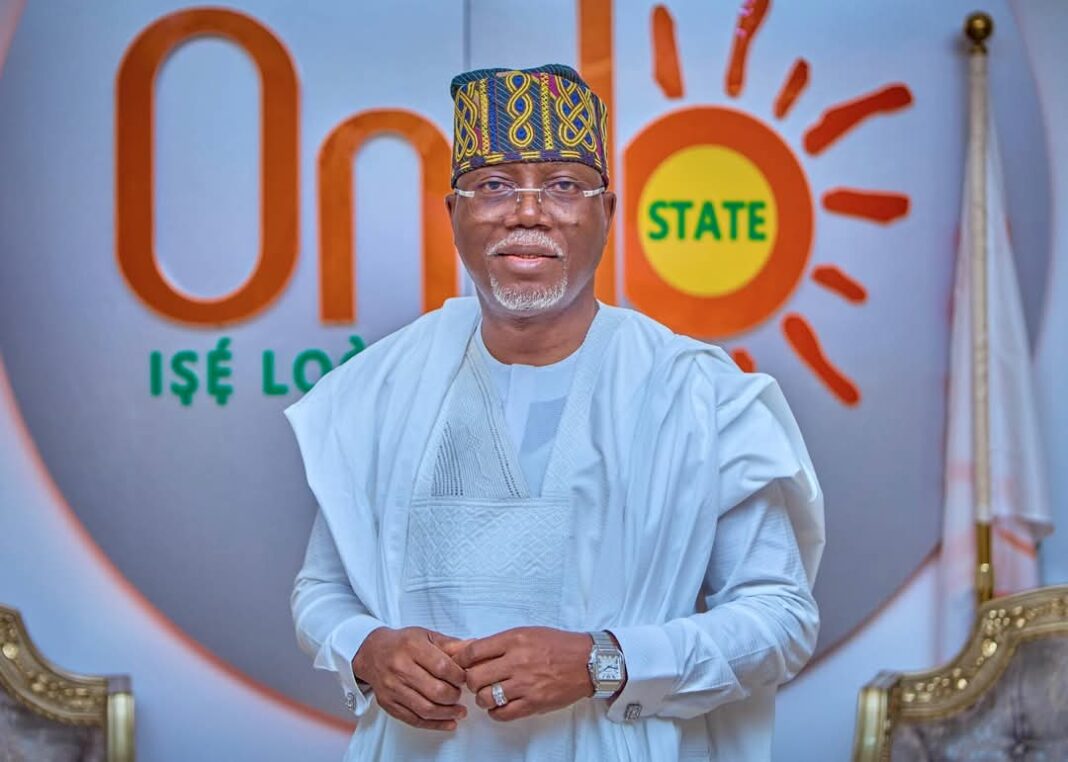

In the rough-and-tumble arena of Nigerian bolekaja politics, where heated rhetoric often eclipses sober reason, Sufuyan Ojeifo’s latest satanic salvo, “No Lotus for Governor Aiyedatiwa,” stands as a textbook case of alarmist speculation masquerading as serious analysis.
It weaves a narrative steeped in unverified “insider” whispers, selective anecdotes, and dramatic flair while conveniently sidelining—almost to the point of utter amnesia—the verifiable records of governance, infrastructure development, and democratic mandates that define the Aiyedatiwa administration.
Such pieces do not merely critique; they risk distorting public discourse by elevating beer parlour narratives above tangible progress, a perilous precedent that undermines informed judgment in our body politic.
This is precisely why a measured, fact-based response is not just necessary but urgent.
While speculative political commentary sometimes has its rightful place in our democratic discourse, the casual reduction of a sitting governor’s entire tenure, together with his official responsibilities and political standing, to mere “luck, ego, and empty pockets” represents not only a gross oversimplification but also a dangerous distortion that wilfully ignores the tangible infrastructure strides, security improvements, economic initiatives, and democratic mandate secured under Governor Aiyedatiwa’s leadership in Ondo State.
Such framing misrepresents the intricate realities of party dynamics, governance during a transition, and the steady progress being recorded despite inherited challenges, thereby poisoning public perception with cynicism rather than illuminating it with facts. This is the very brand of reductive punditry that erodes trust in leadership and prioritises spectacle over substance.
Governance Over Internal Party Intrigue
Governor Aiyedatiwa was democratically elected in 2024 with a strong mandate, defeating Agboola Ajayi. This victory was not handed to him on a platter of mere “providence” but was earned through voter confidence after his service as Deputy Governor and Acting Governor. Since assuming office, he has focused on delivering the dividends of democracy by commissioning road projects, including the Akure–Idanre and Akungba–Ikare roads, expanding water infrastructure, and advancing economic initiatives such as the Olokola Free Trade Zone Technical Committee.
These are concrete steps toward transformation, not the “personal interests first” narrative advanced in the article.
Internal APC candidate-list disputes are common in Nigerian politics and often reflect broader national influences, lobbying, and alignments ahead of future electoral cycles. Attributing every outcome of contests in which the governor is not even a contestant to his supposed “ingratitude” or failure to “fund the structure” amounts to partisan speculation rather than objective analysis.
Party structures evolve. Governors are elected to govern their states, not to permanently control party machinery. Claims of “Abuja tears” and imminent impeachment remain unsubstantiated whispers. No formal moves have materialised, and the governor continues to enjoy both constitutional protections and a valid democratic mandate.
Respecting Legacies While Charting Progress
Governor Aiyedatiwa has consistently acknowledged the foundations laid by the late Governor Rotimi Akeredolu. Building on a predecessor’s legacy does not mean freezing it in time. Every leader must make adjustments to meet current realities; that is responsible governance, not “biting the hand that fed him.”
Aiyedatiwa has consistently maintained that he has no issues with figures such as Betty Akeredolu or other stakeholders. Even if disagreements exist, they are normal in politics and do not erase the governor’s contributions to the stability and development of Ondo State.
Security developments further counter the “wilting lotus” metaphor. Recent foiled security threats, including an alleged plot to bomb the Government House, demonstrate proactive leadership in protecting lives and critical infrastructure. Ondo State remains relatively peaceful compared with many other states across the country.
Focus on Performance, Not Palace Politics
The article’s central thesis—that Governor Aiyedatiwa’s rise rests on nothing more than “luck without wisdom”—is not only condescending but fundamentally flawed. It casually dismisses his proven business acumen, his extensive experience as a successful entrepreneur, his service on the board of the Niger Delta Development Commission (NDDC), and the decisive electoral mandate bestowed upon him by the people of Ondo State in the 2024 governorship election.
Far from being an “accidental” leader, Aiyedatiwa represents the electorate’s deliberate choice for continuity, competence, and pragmatic leadership at a critical moment in the state’s history, securing what the author describes as an “18.0 grand slam.”
To reduce such an uncommon feat and overwhelming democratic validation to mere fortune is not only a grave disservice to the truth but also an insult to the collective judgment of the politically conscious, discerning, and sophisticated people of Ondo State. At the same time, it exposes what the author characterises as the poverty of paid analysis.
Governance should be judged by infrastructure delivered, jobs created, security strengthened, and lives improved—areas in which this administration continues to record steady gains.
Party realignments and the permutations ahead of 2028 will come and go. What matters is effective leadership today. Governor Aiyedatiwa is governing, not merely politicking. He deserves support for prioritising Ondo State’s progress over endless internal power struggles.
In conclusion, the satanic and speculative political obituaries being written about Governor Aiyedatiwa’s influence are not only premature but profoundly misplaced.
Ondo State is steadily advancing under his stewardship, with visible progress in infrastructure, security, economic revitalisation, and the welfare of its people.
History and the electorate will ultimately render the true verdict—not through the colourful prose of paid critics spinning melodramatic tales of “wilting lotuses,” but through the hard, undeniable evidence of measurable achievements on the ground.
Let us, therefore, judge our leaders by their verified accomplishments and unwavering commitment to public service rather than by the fleeting sophistry of partisan narratives that often glorify violations of electoral laws and the brazen subversion of the people’s wishes.
Governor Lucky Orimisan Aiyedatiwa deserves that measure of fairness.
Oloriegbe, a socio-political analyst and a member of The Progressive Counsel, writes from Akure, Ondo State.