



Dr. Julius Debrah, Ghanaian President’s Chief of Staff, urges Africa to add value to its resources, develop homegrown solutions and turn knowledge into wealth
…
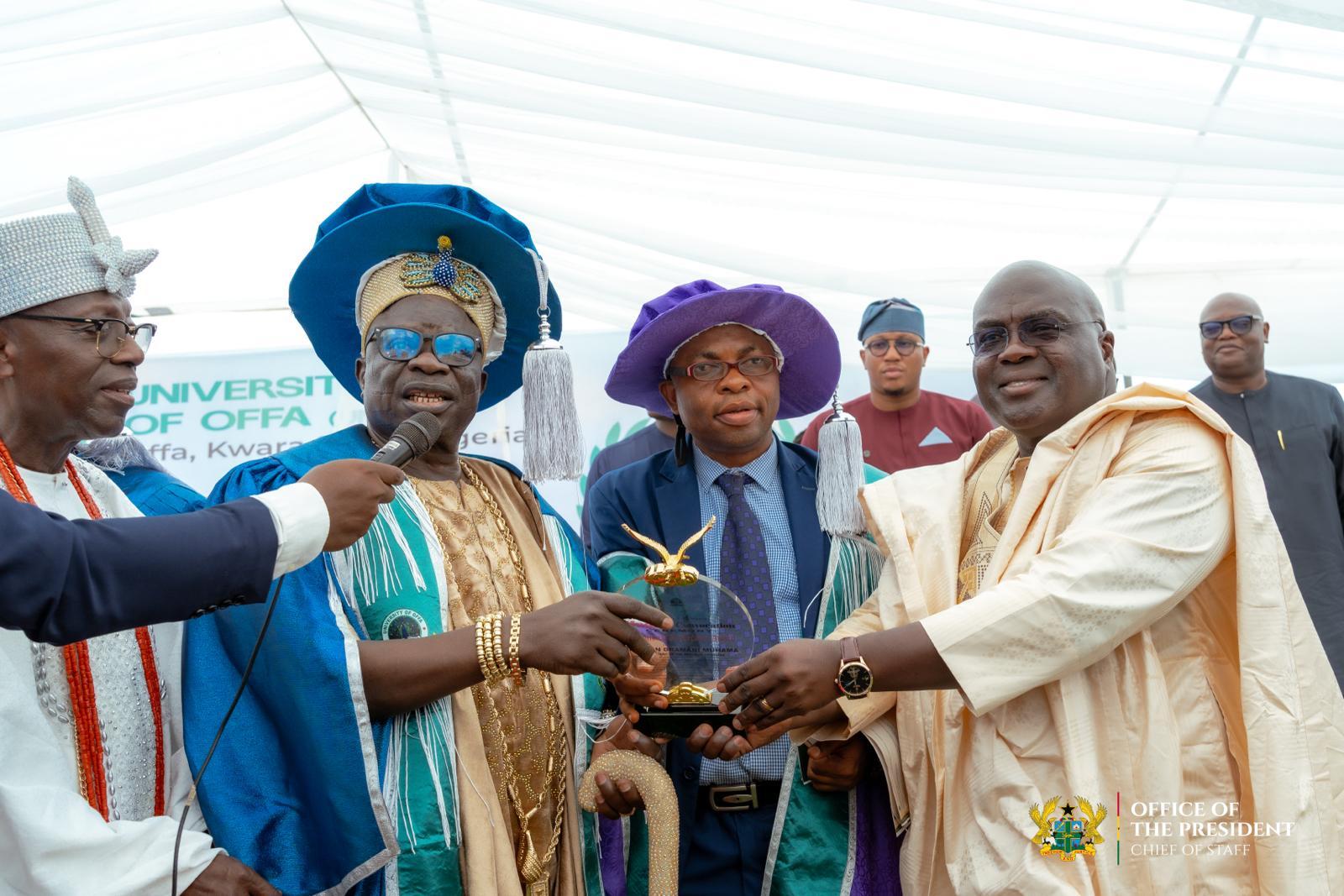
The occasion was the maiden convocation ceremony of the University of Offa, Kwara State. The assignment appeared straightforward: celebrate the pioneer graduates, the university’s faculty, and Ghana’s President, Mr. John Dramani Mahama, recipient of the institution’s Special Leadership Award. Then, deliver a speech befitting the honour conferred on the Ghanaian leader. Date was Monday, October 12, 2026.
But as Dr Julius Debrah, Mahama’s Chief of Staff and representative at the ceremony, mounted the podium, it became clear that the audience was in for something more than a conventional lecture on public service leadership.
What unfolded was an engaging masterclass on enterprise, innovation, resilience and Africa’s development possibilities. It was a compelling argument for why university graduates must look beyond certificates and the search for salaried employment to identify society’s problems, create value and transform knowledge into sustainable livelihoods.
For the 40 minutes he held the floor, Debrah kept his audience engrossed with a presentation that blended intellectual depth with practical wisdom. His listeners included the university’s pioneer graduates, members of its Governing Council and faculty, captains of industry and political leaders, among them Kwara State Deputy Governor, Mr. Kayode Alabi, who represented Governor AbdulRahman AbdulRazaq.
The two-term Chief of Staff to President Mahama began on a celebratory note, congratulating the pioneer graduates on their historic achievement. Being first, he reminded them, was both an honour and a responsibility.
“The Class of 2026 will forever be the first, and that distinction carries honour and responsibility,” he declared. “Others will follow the path you establish.”
It was a fitting opening. But the applause that greeted the graduates’ historic milestone soon gave way to a more searching conversation about what awaited them beyond the university gates.
Taking his cue from the convocation theme, From Certificate to Enterprise, Debrah offered a thoughtful examination of the realities confronting Africa’s newest crop of graduates. His central message was simple but profound: education must be more than a passport to employment; it must also be a springboard for enterprise, innovation and problem-solving.
He acknowledged that studying hard, earning a degree and securing a good job remained legitimate aspirations. For generations, these had represented the conventional rewards of academic achievement. But in a rapidly changing world, he argued, a certificate alone could no longer be the final destination.
“Today’s world,” the two-term Chief of Staff maintained, “also needs people who can identify problems, create value, adapt to change, use technology intelligently and open opportunities for others. That is the journey from certificate to enterprise.”
And enterprise, he was quick to clarify, was not simply another word for setting up a company or becoming an entrepreneur.
“Enterprise means more than starting a company,” he said emphatically. “It is a mindset of initiative, creativity, problem-solving and resilience. Whether you enter business, public service, academia or a profession, that mindset will remain a great asset.”
In other words, the graduate who finds a better way to deliver a public service, the researcher who develops a practical solution to an everyday challenge, and the professional who creates opportunities for others are all contributing to the enterprise mindset Africa desperately needs.
For Debrah, this shift in thinking has become particularly urgent because the graduates are entering a world being reshaped by artificial intelligence, digital technology, climate pressures and changing patterns of international trade. These forces, he observed, are rewriting the rules of opportunity, and Africa cannot afford to sit on the sidelines.
“Africa cannot remain a spectator,” he submitted. “We must help shape these changes and make them work for our people.”
He urged the graduates to recognise that their generation possessed opportunities that previous generations could scarcely imagine. With digital tools, an idea conceived in Offa, Accra or Lagos could reach customers and collaborators across national boundaries.
Already, young Africans are building enterprises in financial services, agriculture, healthcare, the creative industries and digital services. The new graduates, he said, should see themselves not merely as beneficiaries of this transformation but as potential drivers of it.
Yet, while challenging young people to think differently, Debrah did not place the entire burden of Africa’s economic transformation on their shoulders. Governments, he insisted, had an equally important responsibility to create an environment in which youthful energy, creativity and ambition could thrive.
Quality education, reliable infrastructure, access to finance, predictable regulation and decent employment were not optional extras, he argued, but essential ingredients for an economy capable of turning ideas into productive ventures.
“Governments must create the conditions in which enterprise can flourish through quality education, reliable infrastructure, access to finance, predictable regulation and decent employment,” he said.
His challenge to the graduates was equally direct: “Young people also have a role. Ask what problem you can solve, what service you can improve and what value you can create.”
It was a call for a meeting of responsibilities: governments must open the doors of opportunity, while young people must be prepared to walk through them with ideas, initiative and determination.
African Universities Must Move Beyond Certificates
From the responsibilities of government and graduates, Debrah turned his attention to another institution central to Africa’s transformation: the university.
Using the University of Offa as his immediate point of reference, he commended its leadership for laying the foundation for the institution’s future. But his message extended well beyond the university’s walls to Africa’s wider community of higher education institutions.
Universities, he argued, must do more than transmit knowledge and award qualifications. They must equip students to test ideas, solve practical problems, develop marketable innovations and create value from what they learn.
“African universities must remain central to this work,” he charged. “A modern university must teach students to think, test ideas and solve problems. Entrepreneurship, digital skills, research and critical thinking should reach across disciplines. Universities should work with industry and help promising students turn final-year projects into useful products and viable enterprises.”
The implication was unmistakable: a promising research project should not end its journey in a dissertation, just as a bright idea should not remain trapped in a lecture room. With the right support, academic work can become a product, a service, a business or a solution to a pressing social need.
He, therefore, encouraged the University of Offa to make enterprise, research and innovation defining features of its institutional identity.
There was also a personal and diplomatic dimension to his appeal. The university’s Vice-Chancellor, Professor Kazeem Alagbe Gbolagade, Debrah told the audience, has an academic connection with Ghana through his previous service at the University for Development Studies. The Chief of Staff expressed hope that this shared academic experience would provide a platform for stronger partnerships across Africa.
Such collaboration, he suggested, could help universities exchange knowledge, build research networks and create opportunities for students and academics to contribute to the continent’s development.
But the bigger challenge confronting Africa, in his view, was not simply how much it produced. It was how much value it extracted from what it produced.
For too long, many African economies have relied heavily on exporting raw materials, often leaving the more lucrative stages of processing, manufacturing and product development to others. Debrah called for a decisive shift towards adding value to African resources and developing solutions suited to African realities.
“Across the continent, we must move beyond exporting raw materials. Our future depends on adding value to what we produce and developing African solutions to African needs.”
He cited Ghana’s 24-Hour Economy initiative as an example of an effort to expand production and create jobs. The broader point was that economic growth must translate into opportunities for young people to apply their knowledge, build businesses and earn sustainable livelihoods.
For the graduates listening in Offa, the message carried a practical lesson: Africa’s development would depend not only on the resources beneath its soil or the crops growing on its farms, but also on its ability to process, transform, innovate and compete.
The continent must increasingly become a producer of finished goods, technologies, services and ideas, rather than remain content with supplying the raw materials from which others create wealth.
Think Africa, Act Beyond Borders
Debrah’s vision for enterprise did not stop at the national frontier. He urged the graduates to resist the temptation to confine their ambitions to their immediate communities or domestic markets.
In an increasingly interconnected world, he argued, young Africans must learn to think continentally and build enterprises capable of crossing borders.
“Think beyond borders,” he told them. “Your market is not confined to Offa, Kwara State or Nigeria. The African Continental Free Trade Area offers a larger African market. Build products that can travel, develop ideas that can scale and form partnerships across the continent.”
It was an invitation to see Africa not as a collection of disconnected national markets but as a vast field of possibilities for trade, innovation and collaboration.
The historical echoes were unmistakable. Ghana’s first President, Dr Kwame Nkrumah, Debrah told the audience, understood that his country’s destiny was inseparable from the destiny of the wider African continent. President Mahama’s representative urged the graduates to embrace that same spirit of continental responsibility, translating it into practical action through businesses, partnerships and ideas that could thrive across national boundaries.
But ambition, he acknowledged, needed financial backing. Ideas might be the starting point of enterprise, but even the most promising ventures require capital to develop, grow and reach their markets.
This brought him to Africa’s financial architecture and President Mahama’s role as the African Union Champion on Financial Institutions. Mahama, Debrah explained, was advancing the case for stronger continental institutions capable of supporting Africa’s development ambitions.
For a graduate in Offa contemplating a business venture, the connection was straightforward.
Ideas need capital. Businesses need affordable financing. Young innovators need patient investment, efficient payment systems and access to markets if their ventures are to move beyond the drawing board.
Without such support, many promising ideas risk remaining just that: promising ideas. With the right financial structures, however, they can become viable enterprises, generate employment and contribute to economic growth.
Debrah’s argument thus brought together the different strands of his address. Universities must nurture ideas; graduates must develop the courage and skills to pursue them; governments must provide an enabling environment; and financial institutions must help turn potential into productive economic activity.
It was a reminder that Africa’s development requires more than inspirational speeches. It demands a coordinated ecosystem in which knowledge, policy, finance and enterprise reinforce one another.
Nigeria and Ghana: A Rivalry Wrapped in Affection
For all its economic and policy prescriptions, the address was not without a lighter, more familiar touch.
Debrah paused to celebrate the enduring relationship between Nigeria and Ghana, two West African neighbours whose ties are woven from history, commerce, culture and family connections.
The relationship, he noted, is visible in the growing number of young Nigerians and Ghanaians studying in each other’s institutions, citizens building businesses across their borders, and artists sharing sounds, ideas and creative influences with audiences far beyond their home countries.
To underline the cultural connection, he spoke warmly of his admiration for Nigerian music stars such as Davido, Asake, Tems, Yemi Alade and Teni, whose creativity and influence have carried Nigerian music to audiences across the globe.
And then, naturally, there was the matter of jollof rice.
No celebration of Nigeria-Ghana relations would be complete without acknowledging the friendly but seemingly endless debate over which country prepares the better version of the popular West African delicacy. The rivalry may generate passionate arguments around dining tables and on social media, but it also reflects a cultural familiarity that makes the two countries natural partners.
Beneath the banter, however, Debrah delivered a more serious message.
“Beneath that friendly rivalry,” he emphasized, “lies a deeper truth: our futures are connected.”
Africa, he argued, would advance faster when its countries worked together. Universities must collaborate, businesses must cultivate partnerships across borders, and young people must learn to recognise opportunities beyond their national boundaries.
As Ghana prepared to assume the African Union chairmanship in 2027, he said, President Mahama would continue to make the case for a more integrated, peaceful and economically resilient continent.
The message was especially relevant to the young graduates before him. The future, he suggested, would reward not only those who could compete but also those who understood the value of collaboration. In the emerging African economy, a partner across the border could be just as valuable as a customer at home.
Failure Is Not the End of the Road
If Debrah’s address began with the honour of being first, it ended with a reminder of the uncertainty that accompanies every new beginning.
For the pioneer graduates of the University of Offa, the journey beyond campus would not necessarily be smooth. Some would find employment quickly; others might struggle to secure their first opportunities. Some business ideas would flourish, while others would fail to gain traction. Plans would change, markets would shift, and carefully prepared applications might attract disappointing responses.
Debrah did not pretend otherwise. Instead, he encouraged the graduates to approach setbacks with perspective, learn from their experiences and keep moving forward.
His exact words; “As I conclude, let me speak briefly about failure. A business idea may not work. An application may be rejected. A carefully prepared plan may meet a market that has changed. Failure is painful, but it is not final. Learn from it, adjust and begin again. Never allow a temporary setback to define you.”
It was perhaps one of the most important lessons of the day. In a world that celebrates success stories, the willingness to confront failure, learn from it and try again can make the difference between a fleeting ambition and a lasting achievement.
For young people stepping into an unpredictable economy, resilience is not merely a desirable personal quality. It is an essential tool for survival, adaptation and growth.
The same principle applies to African governments, universities and businesses. Development rarely follows a straight line. Policies may need adjustment, research may produce unexpected results, and enterprises may have to reinvent themselves in response to changing circumstances. Progress depends on the willingness to learn, adapt and persevere.
By the time Debrah concluded, the speech had travelled well beyond the formalities of an award presentation. What began as an occasion to honour a continental leader had become a conversation about the responsibilities of a new generation, the purpose of higher education and the economic future of Africa.
For the University of Offa’s pioneer graduates, the charge was clear: the certificate they had earned was an achievement, but it was not the end of their journey. It was a starting point.
Their task was to turn learning into solutions, ideas into opportunities and ambition into enterprise. For the continent, the challenge was to build the institutions, infrastructure, partnerships and financial systems that would enable them to succeed.
And for Africa’s leaders, the message was equally unmistakable: the continent’s future will depend not simply on what it possesses, but on what it can create from those resources; not merely on the number of graduates its universities produce, but on the problems those graduates can solve; and not on the promises it makes, but on the value it adds to the lives of its people.
At the University of Offa’s maiden convocation, that was the leadership lesson delivered on President Mahama’s behalf: certificates matter, but what graduates do with them matters even more.
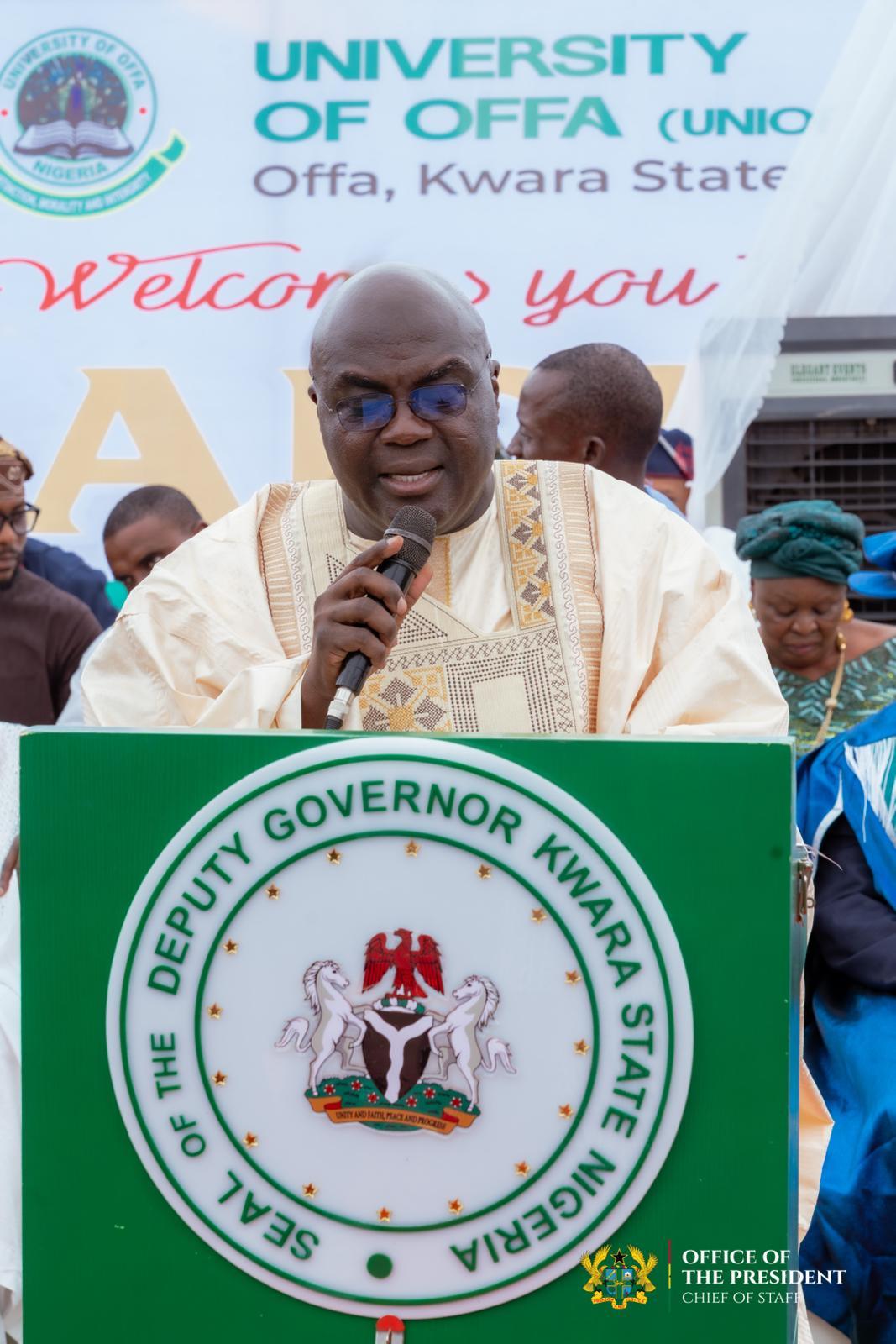
ADDRESS BY HON. JULIUS DEBRAH, PhD, CHIEF OF STAFF OF THE REPUBLIC OF GHANA, AT THE MAIDEN CONVOCATION OF THE UNIVERSITY OF OFFA, OFFA, KWARA STATE
MONDAY, 12TH OCTOBER 2026
Theme: “From Certificate to Enterprise: Africa’s Graduates as Architects of the Continent’s Economic Future”
Your Royal Majesty, Oba Mufutau Muhammad Gbadamosi Oloyede, Okikiola Esuwoye II, Ajagungbade I, Olofa of Offa and Chancellor of the University of Offa;
The Executive Governor of Kwara State;
The Founder and Proprietor of the University of Offa, Dr. Chief Rasaq Omoniyi Oyewale;
The Pro-Chancellor and Chairman of the Governing Council;
The Vice-Chancellor, Professor Kazeem Alagbe Gbolagade;
Members of the Governing Council and Senate;
Honourable Ministers and Members of Parliament;
Distinguished Traditional Rulers;
Members of Convocation;
Faculty and Staff of the University;
Proud Parents and Guardians;
And, most importantly, the Pioneer Class of 2026;
Ladies and Gentlemen;
Good morning.
It is a great pleasure to join you at the maiden convocation of the University of Offa. I bring warm greetings from His Excellency John Dramani Mahama, President of the Republic of Ghana, who asked me to represent him today. He sends his warmest regards to His Royal Majesty, the Governor, the University community, the graduating class and the people of Offa.
The City of Offa holds a very special place in President Mahama’s personal story. Many years ago, as a young man, he lived here with his stepmother, Madam Lucy Balogun, a daughter of this community. He remembers with fondness the warmth, generosity and strong communal spirit of the people of Offa.
When he returned to this city in 2015, His Royal Majesty did him the great honour of conferring on him the title-Aare Atolase of Offa Kingdom. He received that honour with humility and a deep sense of belonging. President Mahama therefore values this invitation greatly. Although duty has kept him away today, Offa remains close to his heart, and he looks forward to returning.
The President carries that belief in African kinship into his work on the world stage. At the African Union, the United gNations and other global forums, he has spoken for fairer development finance, stronger African institutions, reparatory justice, peace and opportunity for young people. In 2027, Ghana will assume the Chairmanship of the African Union and many across Africa look forward to President Mahama’s experienced leadership.
I am equally delighted that today marks the investiture of His Royal Majesty as the University’s first Chancellor. Your Royal Majesty, congratulations. I also congratulate the Founder, Governing Council, Vice-Chancellor, faculty and staff whose vision and sacrifice have brought this institution to this day.
This convocation is unlike any that will follow. Today, the University of Offa graduates its pioneers. The Class of 2026 will forever be the first, and that distinction carries honour and responsibility. Others will follow the path you establish.
FROM CERTIFICATE TO ENTERPRISE
Dear Graduates, today’s theme speaks directly to the Africa you are entering. Our continent needs skilled doctors, teachers, engineers, scientists, entrepreneurs, public servants and professionals in every field. My first message is simple: your certificate is a foundation; it is not a finish line.
Previous generations were often told to study hard, obtain a certificate and find a good job. That remains a legitimate ambition. But today’s world also needs people who can identify problems, create value, adapt to change, use technology intelligently and open opportunities for others. That is the journey from certificate to enterprise.
Enterprise means more than starting a company. It is a mindset of initiative, creativity, problem-solving and resilience. Whether you enter business, public service, academia or a profession, that mindset will remain a great asset.
You graduate while artificial intelligence, digital technology, climate pressures and changing patterns of trade are reshaping the world. Africa cannot remain a spectator. We must help shape these changes and make them work for our people.
A GENERATION OF OPPORTUNITY AND RESPONSIBILITY
Your generation has opportunities that previous generations did not possess. Digital tools allow an idea developed in Offa, Accra or Lagos to reach people across borders. Young Africans are already building enterprises in finance, agriculture, healthcare, the creative industries and digital services. You can contribute to that progress.
Governments must create the conditions in which enterprise can flourish through quality education, reliable infrastructure, access to finance, predictable regulation and decent employment. Young people also have a role. Ask what problem you can solve, what service you can improve and what value you can create.
KNOWLEDGE INNOVATION AND VALUE ADDITION
African universities must remain central to this work. A modern university must teach students to think, test ideas and solve problems. Entrepreneurship, digital skills, research and critical thinking should reach across disciplines. Universities should work with industry and help promising students turn final-year projects into useful products and viable enterprises.
I encourage the University of Offa to make enterprise, research and innovation part of its identity. Your Vice-Chancellor, Professor Kazeem Alagbe Gbolagade, has an academic connection with Ghana through his previous service at the University for Development Studies. I hope that connection supports stronger partnerships across Africa.
Across the continent, we must move beyond exporting raw materials. Our future depends on adding value to what we produce and developing African solutions to African needs. In Ghana, the 24-Hour Economy initiative seeks to help businesses expand production and create jobs. A productive economy must give young people room to turn knowledge and ideas into sustainable livelihoods.
THINK AFRICA
Graduates, think beyond borders. Your market is not confined to Offa, Kwara State or Nigeria. The African Continental Free Trade Area offers a larger African market. Build products that can travel, develop ideas that can scale and form partnerships across the continent. Kwame Nkrumah understood that Ghana’s future was tied to Africa’s future. That responsibility now belongs to your generation.
Africa’s financial architecture also matters. As the African Union Champion on Financial Institutions, President Mahama is advancing stronger continental institutions to support Africa’s ambitions. The relevance to a graduate in Offa is simple: ideas need capital. Businesses need affordable finance. Young innovators need patient investment, efficient payment systems and access to markets.
WOMEN SHAPING THE FUTURE OF AFRICA
Let me say a special word to the young women graduating today. Africa cannot reach its full potential while women are underrepresented in leadership, enterprise, science and technology. Let your education open doors to employment, leadership and service. We need women who will build businesses, lead institutions and shape public policy. Your success is part of Africa’s progress.
GHANA NIGERIA AND OUR SHARED FUTURE
Ghana and Nigeria are bound together by history, commerce, culture and family ties. Our young people study in each other’s institutions, build businesses across our borders and share music and ideas. We also continue the serious debate over which country makes the better jollof rice. Beneath that friendly rivalry lies a deeper truth: our futures are connected.
Africa will advance faster when her countries cooperate. Our universities must collaborate, our businesses must find partners across the continent, and our young people must see opportunity beyond national borders. As Ghana prepares to lead the African Union in 2027, President Mahama will continue to make the case for a more integrated, peaceful and economically resilient continent.
As I conclude, let me speak briefly about failure. A business idea may not work. An application may be rejected. A carefully prepared plan may meet a market that has changed. Failure is painful, but it is not final. Learn from it, adjust and begin again. Never allow a temporary setback to define you.
To the parents and guardians whose sacrifices made this day possible, I salute you. In Ghana, we would say, Ayekoo. To the lecturers and staff, your work is evident in the graduates before us. To the Founder and all who built this University, congratulations. Your Royal Majesty, congratulations once again o n your investiture.
To the Pioneer Class of 2026, your certificate may open a door, but character will determine what happens after you enter. Skill can earn an opportunity; integrity earns trust. Do your work well, keep your word and use what you have learned to improve the lives of others.
A FINAL CHARGE TO THE PIONEER CLASS
Go and build. Build businesses, institutions and solutions. Build bridges between people and ideas. If the opportunity you seek does not appear immediately, start with what is in your hands. Great enterprises often begin when one person pays close attention to a problem that others have learned to tolerate.
Years from now, when you return, may you point to work that created jobs, strengthened a community, advanced knowledge or restored hope. You are the first graduates of this University. Make the word first mean that you set the standard, carried others with you and left a path worth following.
Africa’s economic future will be shaped by people prepared to begin, persevere and serve. You have received the education and earned the certificate. Now go forward with courage and take your place among the builders of that future.
Congratulations, Pioneer Class of 2026. May God bless you, the University of Offa, the people of Offa, the Federal Republic of Nigeria, the Republic of Ghana and our beloved continent, Africa.
I thank you.